News · Always fresh
The signal in the feed.
Auto-curated dispatches on AI, React, Next.js, and the web — distilled down to what you actually need to read.
22,516 articles
Page 121 · sorted by freshness
General Tech
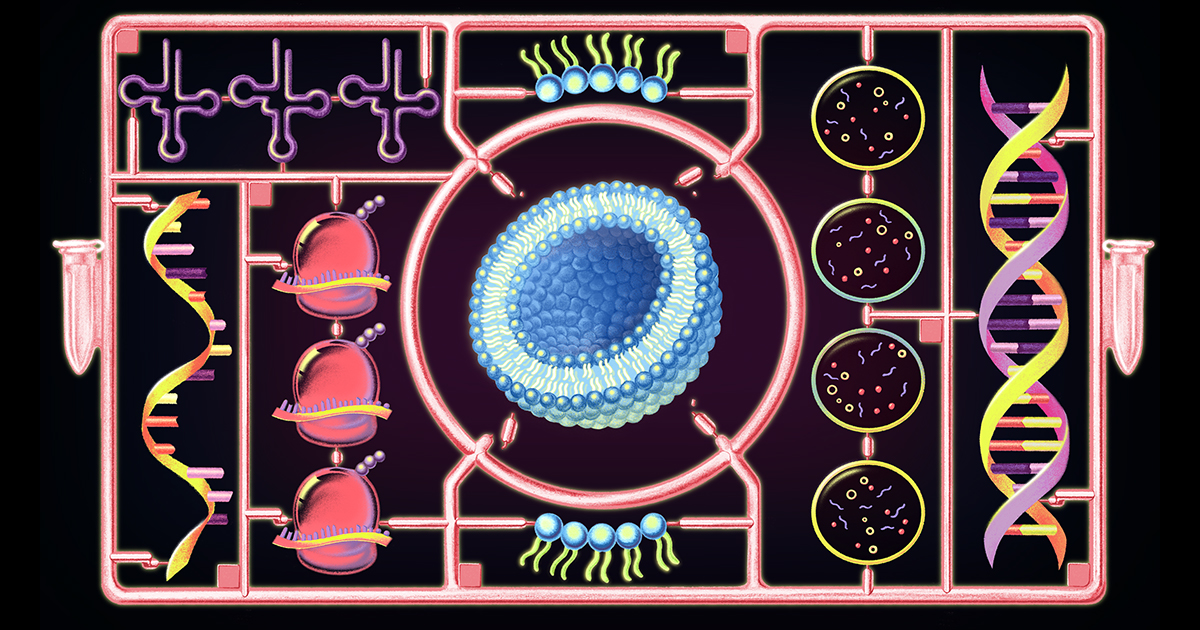
For First Time, a Cell Built from Scratch Grows and Divides
6d ago11 min read
AI
Gemini Spark, Google’s agentic assistant, is now available on Mac
Google's 24/7 agentic assistant, Gemini Spark, comes to Mac alongside other improvements, like real-time tracking and support for more apps.
6d ago
AI
Sony to end physical PlayStation game disc production in 2028
Sony will stop producing physical discs for all new PlayStation games beginning in 2028, as the company embraces an all-digital future.
6d ago
General Tech
FFmpeg 9.1's new AAC encoder
6d ago

React
Debugging React: From Taking a Deep Breath to Finding the Root Cause
Debugging React: From Taking a Deep Breath to Finding the Root Cause We've all been there. You've just pushed what you thought was a brilliant new feature, you refresh the page, and... nothing. Or worse, something completely unexpected. That sinking feeling in your stomach, the sudden urge to just console.log everything. Debugging, especially in a dynamic framework like React, can feel like trying to find a needle in a haystac k while blindfolded. But here's the thing: debugging isn't a dark art
6d ago6 min read
AI
Builders Stage agenda revealed: Practical strategies for scaling startups at TechCrunch Disrupt 2026
The Builders Stage is returning to TechCrunch Disrupt 2026, bringing together 10,000+ founders, startup operators, and investors for practical conversations. and Q&A on what it takes to build and scale successful companies. Register now to save up to $330.
6d ago

React
How does VuReact compile Vue 3's withDefaults to React?
VuReact is a compiler toolchain for migrating from Vue to React — and for writing React with Vue 3 syntax. In this article, we will look at how Vue 3's withDefaults macro is compiled into React. To keep the examples easy to read, this article follows a few simple conventions: All Vue and React snippets focus on core logic only, with full component wrappers and unrelated configuration omitted. The discussion assumes you are already familiar with the API shape and core behavior of Vue 3's withDefa
6d ago9 min read

React
I Built 174 Free Browser-Based Tools Using React + Vite
When I started this project, I had one simple goal: Create a collection of free online tools that work instantly, without requiring users to install software or create an account. Most websites today either: Require a subscription I wanted to build something different. Why I Built It As a student and developer, I constantly needed small utilities like: JSON Formatter Instead of opening different websites every time, I decided to build them into one platform. Tech Stack The project is built using
6d ago2 min read
General Tech
Monetization Gateway
6d ago
General Tech
Your Kids' School Bus Is About to Become a Roaming Surveillance Vehicle
6d ago

React
I Built a Zero-Dependency React Rich Text Editor — Here's How to Use It
Build a Lightweight Rich Text Editor for React (Zero-Dependency Core) Every React application eventually needs a rich text editor. Whether you're building a blog platform, CMS, admin dashboard, knowledge base, or comment system, there comes a point where a simple isn't enough—but a full document editor is overkill. Popular libraries like Draft.js, Quill, Slate, and TipTap are excellent, but they often come with trade-offs: 📦 Larger bundle sizes 🔌 Multiple dependencies ⚙️ More setup than a simp
6d ago5 min read

React
Backpropagation Is Just Dynamic Programming (I Animated It to Prove It)
Everyone learns backpropagation as "apply the chain rule." Almost nobody explains why it's fast — and that "why" is the whole reason deep learning is computationally possible at all. So I animated one full training step to show the part most explanations skip. What you're actually seeing Forward pass: a single signal travels through 3 weights → a prediction → compared to the target = the loss. Backward pass: the error (δ) flows back through the network. δ₃ is computed at the output, then reused
6d ago4 min read